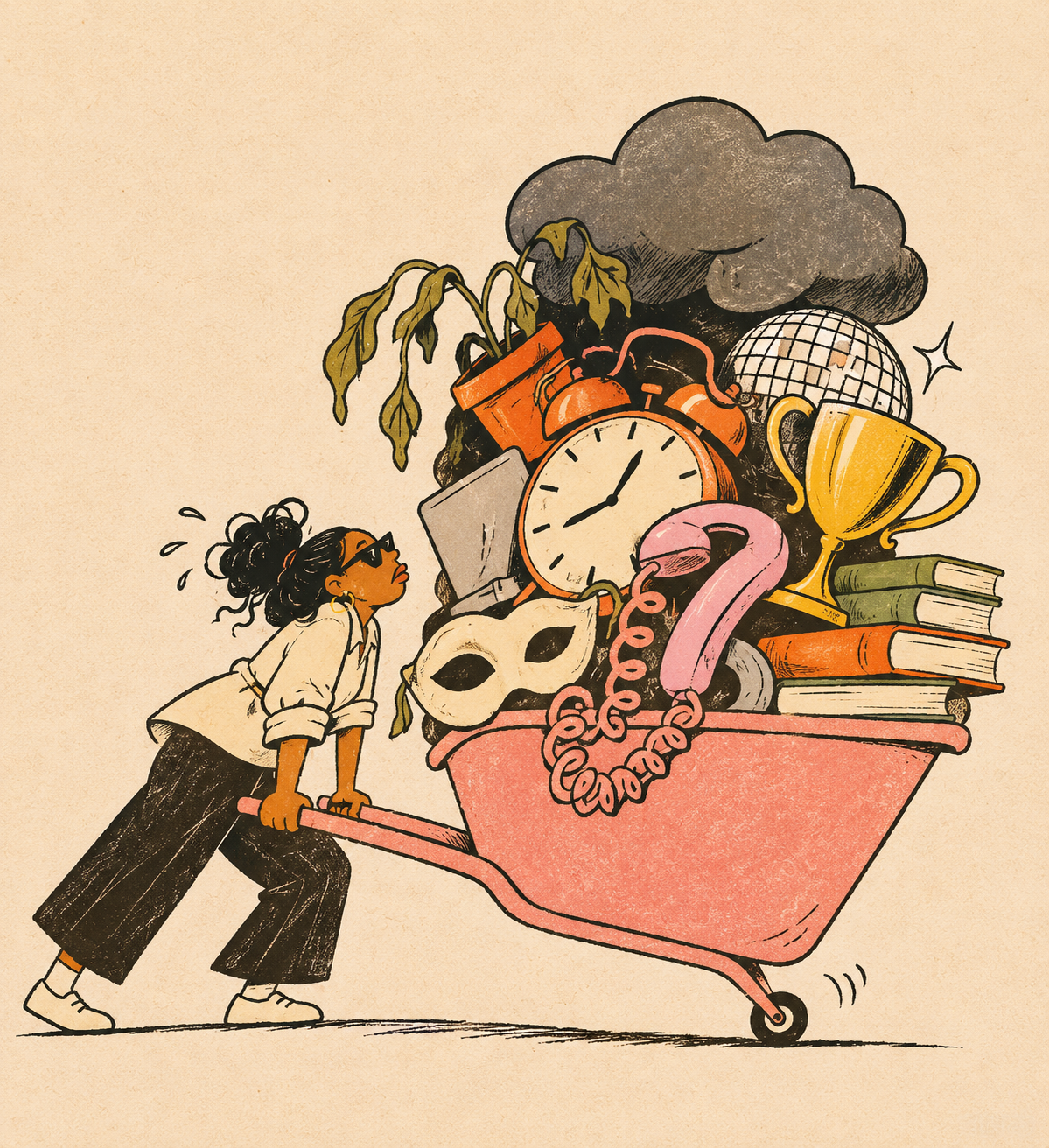
If 2025 was Tough Mudder then 2026 was full-on SAS training in Dagestan, blindfolded whilst balancing on a single big toenail. She was a character-building year for sure.
There is something peculiar about the effort now required to avoid exhaustion. We've developed routines for waking up, winding down and sleeping better, all to remain capable of doing it again the following morning. Buy the expensive pillow. Download the app. Stretch, hydrate and become the sort of person who can withstand another working week without needing to be scraped off the ceiling.
I'm all for investing in your life: take responsibility for your wellbeing and enjoy growing. But how much personal time, money and energy are we spending simply to remain capable of working?
We're having familiar conversations about burnout, workplace culture and wellbeing. We have no shortage of advice on managing stress and building resilience. All useful things. Less discussed are the conditions we're trying so hard to recover from. What if some exhaustion isn't a failure to look after ourselves, but a consequence of the way we're expected to work?
Perhaps we've become very good at managing the symptoms while leaving the arrangements that produce them largely untouched. It's time we looked at the whole transaction, not just the salary that lands at the end of it.
HIDDEN FIGURES
Employment has a fairly straightforward premise. An organisation has work that needs doing and you have the skills and time to do it. In exchange, you receive a salary and, ideally, an arrangement that benefits both parties. Responsibilities are agreed, expectations established and everyone gets on with it. Nobody needs economists.
Except the job description rarely tells the whole story. Somewhere between what we're employed to do and what it takes to remain employed lies the unofficial contract: extra availability, social effort, emotional regulation and self-promotion that don't appear in the paperwork but can influence how someone is treated, remembered or recommended.
I'm not talking about the occasional late finish or the extra effort required to get a project over the line. Work can be brilliant: it can shape you, create friendships and bring people together to make things they couldn't make alone. Nobody is suggesting we remove the human element. The complication is when being a good colleague starts to mean offering an organisation your whole self.
You can care about the work, respect the people and contribute generously without wanting your life to revolve around your employer. Collaboration doesn't require permanent availability; enthusiasm needn't be performed around the clock and a career shouldn't turn every relationship into another networking opportunity. A job is not an immersive theatre experience. I don't need to remain in character until Friday.
This shouldn't be controversial. It is, after all, a job. Not a gang. Not an arranged marriage. Not an audition for a second family, nor is it joining the Navy, the Army or Spurs.
Yet visibility, enthusiasm, flexibility and cultural participation can begin to carry as much weight as the work itself. Someone can deliver excellent work and still be judged on how often they appear, how readily they agree or whether they're seen to be going above and beyond. The work may be measurable; the expectations surrounding it are less so. Being busy isn't proof of importance, although sometimes it is proof that a calendar has been left unsupervised.
Sociologist Diane Vaughan developed the idea of the normalisation of deviance while examining decisions surrounding the Challenger disaster. She showed how repeated departures from accepted practice become familiar until warning signs are reinterpreted as acceptable. An ordinary workplace is not comparable to a space-shuttle disaster; the useful parallel is how small exceptions accumulate until the exception becomes the baseline. [8]
At work, that drift looks less dramatic but still matters. Last-minute changes become routine; manufactured urgency is mistaken for importance; avoidable problems become things people absorb. A 'quick one' becomes a meeting, the meeting creates three actions and those actions require another meeting to explain the first. Nobody has asked you to work more, but your day has been eaten by somebody else's uncertainty.
There is also a performance involved. In The Presentation of Self in Everyday Life, Erving Goffman described how people manage the impressions others form of them. At work, that can mean appearing confident and untroubled, regardless of what's happening underneath. [9]
Arlie Russell Hochschild's concept of emotional labour adds another layer: managing feelings and expression to meet the expectations of a role. Her research examined paid service work, but the idea helps us recognise the effort involved in appearing upbeat and accommodating when we're tired, anxious or frustrated. The job is not only the task; sometimes it's the performance wrapped around it. [10]
There is no line on the payslip for keeping your face pleasant while a project changes direction for the fourth time. Perhaps there should be. It would make for an interesting expenses policy.
At what point does being a good employee become an exercise in continually proving that you deserve to be one?
POTENTIALLY, INDEFINITELY
The traditional career bargain was simple enough: experience brought responsibility and, eventually, greater security. It was never guaranteed, but there was a direction of travel. You learnt the job, took on more responsibility and, with luck, moved towards something senior. The ladder might have been wobbly, but you could see the next rung.
I'm not sure that direction is quite so dependable anymore.
Take the creative industries. The IPA's 2025 Agency Census found that its member agencies employed 6.8% fewer people on 1 September 2025 than a year earlier. Within creative and other non-media agencies, employment fell by 14.3%. The number of employees aged 25 and under dropped by 19.2%, while reported vacancies fell by 40.8%. They don't represent the entire creative economy, but they offer a telling snapshot: fewer people, fewer vacancies and a particularly sharp decline among younger employees. [1]
Getting in is one problem. Where do people go once they're already there?
Creative PEC's 2026 Skills Audits found that skills challenges are particularly acute at mid-career level. Among employers reporting skills shortages, 43% identified problems with more experienced staff; the figure was 37% among employers reporting skills gaps. Its job-quality research adds another dimension: job security in the creative industries fell from 57% in 2014–16 to 43% in 2022–24, compared with 51% across other industries. [2][3]
The creative industries aren't uniformly bad places to work. The same research found that full-time employees earn 35% more than the economy-wide average and report greater autonomy. The bargain can be attractive and precarious at once. Autonomy is worth having, but it doesn't pay the rent if the work disappears between projects.
Meanwhile, professional value keeps expanding. People are expected to update skills, understand new technologies, become commercially aware and remain useful as businesses change direction. Some of this is reasonable. But when the definition of a valuable employee keeps shifting, it's difficult to know what you're working towards.
It's a bit like The X Factor, except the prize is keeping the job you've already got, the judges haven't agreed on the criteria and someone has changed the brief during the ad break.
People can end up spending their energy demonstrating relevance rather than developing expertise. Instead of concentrating on what they contribute, they're left wondering what else they need to prove. Adaptability is useful; permanent auditioning is not a career plan. Flexibility is a wonderful virtue, particularly when it's being requested of somebody else.
It would be easy to read this as an industry with no future, but that isn't what the evidence says. Skills England projects that employment across 30 priority creative occupations will grow by 416,000 between 2025 and 2035. It also estimates that 493,000 workers will leave the workforce and need replacing. These are projections, not guaranteed vacancies. A sector can anticipate demand while individuals still face an uncertain route through it. [7]
Who can afford to participate is another question. The Department for Culture, Media and Sport found that young people and parents see competition as a major barrier to creative careers. It also identified confusion about routes into the sector, limited awareness of available jobs and concerns about long-term security. These aren't simply confidence problems for young people to solve; they're questions about access. [4]
The wider youth labour market adds context, though it isn't a creative-industry figure. The latest House of Commons Library briefing reports 688,000 people aged 16–24 unemployed in July–September 2026 (15.1%). It doesn't tell us how many aspiring creatives are out of work, and the underlying Labour Force Survey still calls for care in detailed comparisons. It is part of the backdrop they're entering. [6]
Bectu's Big Survey adds a more practical obstacle. Thirty-nine per cent of creative workers said they had felt pressured to work for free. Among people in their first two years in the industry, that rose to 49%; 26% said they had entered the sector through internships. An unpaid internship is not free. Somebody is paying. Usually it's the person doing it, in rent, food and the luxury of having a life outside the office. [5]
A decent salary, a permanent job, a promotion and a recognised title have traditionally signalled progress. But when workloads grow, networking becomes relentless and the next step remains uncertain, those markers lose their appeal. You can be experienced without feeling established, capable without feeling secure and ambitious without knowing what you're aspiring towards.
WHO CAN AFFORD TO SAY NO?
There's a rather important part of this arrangement that has very little to do with how good you are at setting boundaries. It's whether you can afford to have them in the first place.
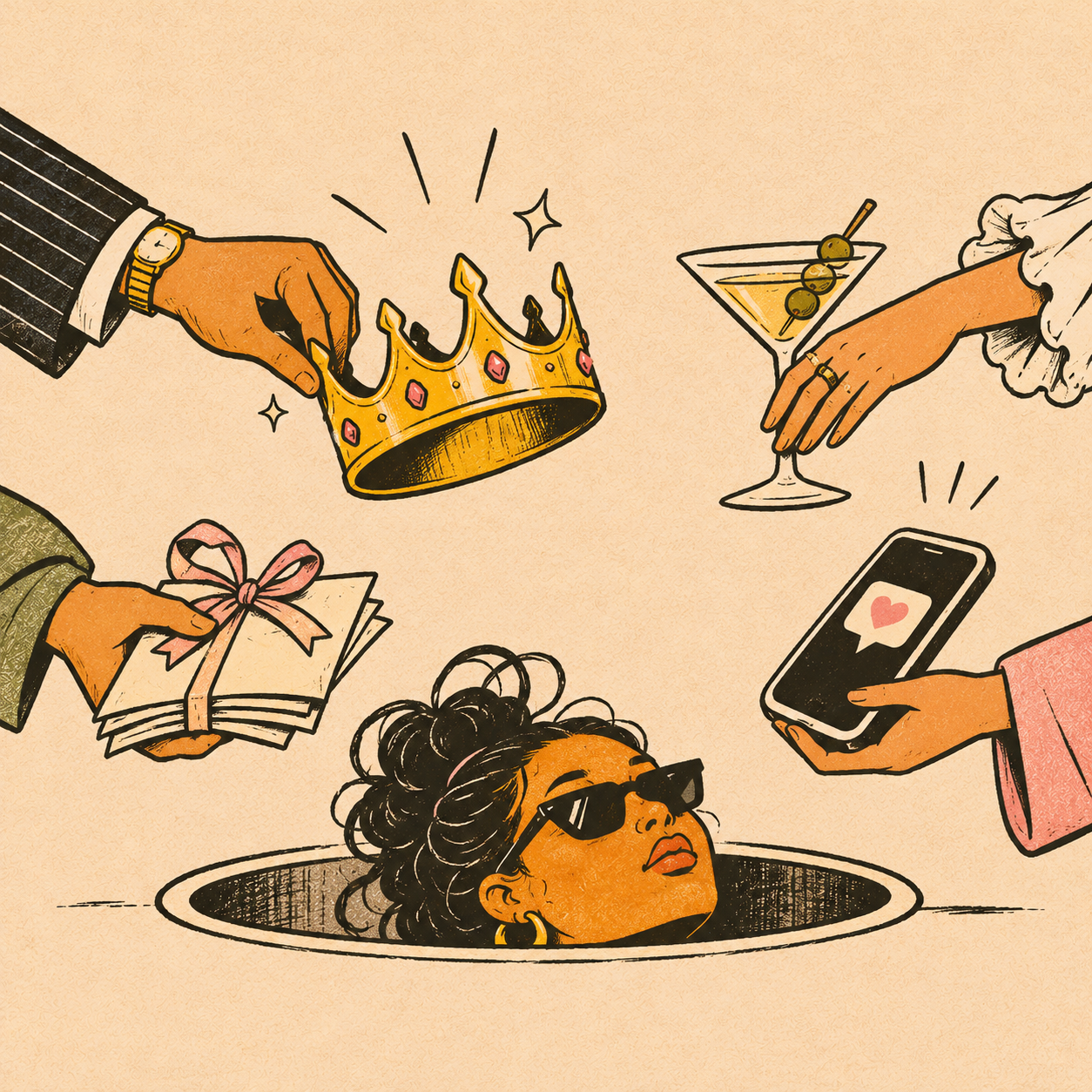
We're encouraged to be discerning about the work we take on and the environments we tolerate. Sound advice, although easier to follow when you have somewhere to land. Financial support, a strong network or confidence you'll find something else can make a difference. Sometimes the person most comfortable challenging a decision isn't more courageous; they might simply have less to lose.
Imagine two people in the same meeting, hearing the same questionable proposal. One feels able to challenge it. The other calculates what disagreement might cost: next month's rent, the next contract or whether the person in the room controls access to the next opportunity. They don't lack judgement; they have different room to take a risk.
They learn when to speak, when to nod, when to laugh and when to make themselves useful. Speak when you've been spoken to. Real warden type shit.
There's another complication in creative industries: the pressure to remain grateful. People enter because they love the work and invest years developing skills and relationships in an industry tied up with identity and ambition. I wouldn't dismiss that. I've gained a great deal from the creative industries and know the opportunity and friendship they can offer.
But appreciating an opportunity and feeling permanently indebted for having received it are two different things. An odd little message can creep into the relationship: you're lucky to be here, so perhaps don't make too much fuss.
There is a leadership version of this performance. Goffman's work on impression management offers a useful lens: a manager can cultivate warmth while shifting blame or avoiding responsibility. The problem isn't charm; it's when appearing to be a good person substitutes for accountability. Being charismatic is not the same as being a good manager. Criticism gets reframed as disloyalty; attention moves from the behaviour to the attitude of the person who raised it. [9]
Gratitude can become professional restraint. When people feel obliged to remain enthusiastic and accommodating to protect their place, self-preservation starts masquerading as commitment. The freedom to challenge a decision isn't experienced equally. Class, disability, caring responsibilities, race and the ability to code-switch can all influence how safe someone feels making themselves heard. The same comment can be read as confidence from one person and attitude from another. That's a power dynamic.
Bectu's 2025 Big Survey of more than 5,500 creative workers in non-performing roles found that 61% had witnessed or experienced bullying or harassment and 71% said behaviour considered toxic elsewhere was often tolerated in the industry. Only 55% of workers who experienced bullying or harassment reported it; just 12% both reported an incident and were satisfied with the response. Three quarters said their last or current role came through a friend or contact. This is a union survey, not a representative census, but it shows how workplace conditions and networks overlap. [5]
The person you're uncomfortable challenging today might recommend you for work tomorrow. The person whose behaviour you're questioning might be connected to the next company you're hoping to work for. Speaking up can put more than your current job in the balance.
Elizabeth Wolfe Morrison and Frances Milliken describe this as organisational silence: a climate in which people come to believe that raising concerns is unwise or futile. Silence isn't necessarily agreement; it can be a rational response to perceived risk. [11] An organisation doesn't have to demand silence if people have learnt what it costs to speak. The freedom to challenge poor treatment shouldn't depend on how comfortably you can afford the consequences.
AN ENTIRE BUILDING OF TALENT
The unofficial contract also shapes whose knowledge counts. I've known producers who are also award-winning directors be overlooked in conversations squarely within their expertise. Their job title appears to carry more weight than the experience they bring into the room.
Keep quiet and your knowledge goes unnoticed; offer guidance outside your job title and risk being seen as overstepping. Knowing what you're talking about can be mistaken for thinking you know better than everyone else. You don't always need someone to tell you to stay in your lane. Sometimes a look across the room will do the job perfectly well.
We're encouraged to think beyond our job descriptions until we do. Initiative is welcome provided it doesn't challenge the established order. Collaboration is celebrated provided everyone remembers who's leading the conversation. We recruit people for their range, then act surprised when they use it.
The cost isn't simply that an individual feels overlooked. The organisation loses access to knowledge and experience it already has because expertise takes time to develop. Dismissing it because it comes from the wrong department is a fairly expensive way to protect someone's territory. That's not particularly good for the work, let alone the people doing it.
THE COMPANY WE KEEP
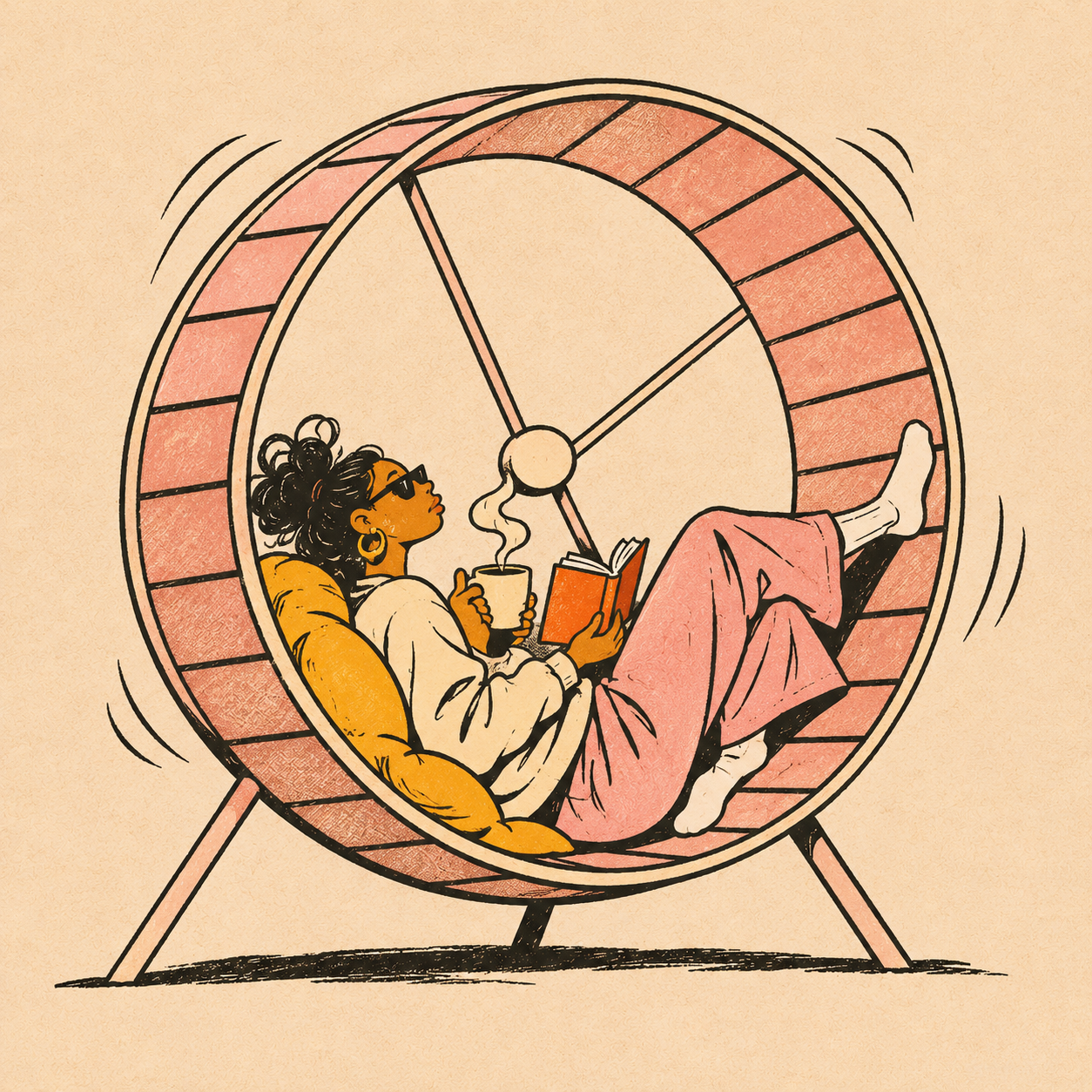
Some of the best professional relationships are built outside the office. Informal conversations can lead to opportunities and friendships. In creative industries, work travels through relationships; collaborations can begin with a conversation that wasn't on anyone's calendar.
The trouble starts when drinking becomes the default, invitations are frequent and not attending attracts its own interpretation. Health, money, caring responsibilities, recovery or simply having other things to do affect someone's ability or desire to participate. If the alternative is to organise something yourself, inclusion becomes another task for the person excluded.
That doesn't make every coffee or drink another item on the job description. Going for a coffee can be a pleasure. Turning every coffee into a low-grade audition for future work is a different beverage altogether. A calendar can be filled with conversations about work until there's no time left to do any and networking is often sold as optional but treated as attendance.
There's a more uncomfortable side: what happens when participation means laughing off behaviour you find inappropriate or maintaining relationships with people you wouldn't otherwise tolerate?
Being a good colleague shouldn't require you to compromise your judgement. Nor should belonging depend on how well you perform enjoyment. 'If you're not in, you're not in' has very little to do with the work and rather more to do with whether the cheerleaders have picked you and whether you're cool enough to hang.
THE NEW CURRENCY
Most people want to do a good job. They want to feel useful, respected and part of something worthwhile; to develop, make things they're proud of and earn enough to enjoy the life they're working to support. None of that is unreasonable. The exchange becomes muddled when skills are only one part of what's expected. The question is what it gives back.
Max Weber's account of the Protestant work ethic offers one way of understanding why productivity can acquire a moral value beyond its economic usefulness. His argument was rooted in a particular religious and historical context, not a direct explanation of every modern workplace. But the wider idea still resonates: work can become a measure of character, and rest can begin to feel like something that needs justifying. [12]
We calculate whether our salary can cover the rent, food, bills and the occasional treat. We're less practised at calculating whether we can afford the energy required to earn that salary. The hours are visible; emotional regulation, self-presentation, social maintenance and uncertainty are harder to put on a payslip.
Of course money matters. Financial security is not a decorative extra, and having enough money can buy choices that other people simply don't have. But a salary is not the full value of the exchange. It cannot give us back every evening spent recovering from work, every opportunity declined because we were too depleted to take it or every part of ourselves we've learnt to keep out of sight.
The new currency doesn't replace money; it reveals what salary alone can't tell us about whether a working life is sustainable. Perhaps the real measure of a working life isn't simply what arrives in your bank account, but what remains of you after you've earned it.
Work will always take something from us. It should still leave us with enough vim to enjoy everything else.
REFERENCES AND FURTHER READING
[1] Institute of Practitioners in Advertising (2026). IPA Agency Census 2025. Published 11 February 2026. https://ipa.co.uk/news/agency-census-2025
[2] Carey, H., Giles, L. and Hay, B. (2026). Creative Industries Skills Audits. Creative Industries Policy and Evidence Centre / Work Advance. Published 12 May 2026. https://pec.ac.uk/research_report_entr/creative-industries-skills-audits/ DOI: 10.5281/zenodo.20072107
[3] Carey, H., Wang, R. and O’Brien, D. (2026). Job Quality in the Creative Industries, 2026. Creative Industries Policy and Evidence Centre, State of the Nations research series. Published 11 November 2026. https://pec.ac.uk/state_of_the_nation/job-quality-in-the-creative-industries-2026/ DOI: 10.5281/zenodo.23763526
[4] Department for Culture, Media and Sport (2025). DCMS Creative Careers Research. Published 31 October 2025. https://www.gov.uk/government/publications/dcms-creative-careers-research/dcms-creative-careers-research
[5] Bectu (2025). Bectu’s Big Survey: Wellbeing at Work; Hiring and Progression in the Creative Industries. Survey of more than 5,500 creative workers in non-performing roles. https://bectu.org.uk/bectu-big-survey-hub/ See also: https://bectu.org.uk/bectu-big-survey-wellbeing-at-work/ and https://bectu.org.uk/bectu-big-survey-hiring-and-progression/
[6] House of Commons Library (2026). Youth Unemployment Statistics. Published 17 November 2026. https://commonslibrary.parliament.uk/research-briefings/youth-unemployment-statistics/
[7] Skills England and Department for Culture, Media and Sport (2026). Sector Skills Needs Assessment – Creative Industries. Updated 6 October 2026. https://www.gov.uk/government/publications/skills-england-annual-skills-report-and-sectoral-skills-needs-assessments-2026/sector-skills-needs-assessment-creative-industries
[8] Vaughan, D. (1996). The Challenger Launch Decision: Risky Technology, Culture, and Deviance at NASA. Chicago: University of Chicago Press.
[9] Goffman, E. (1959). The Presentation of Self in Everyday Life. New York: Anchor Books.
[10] Hochschild, A. R. (1983). The Managed Heart: Commercialization of Human Feeling. Berkeley: University of California Press.
[11] Morrison, E. W. and Milliken, F. J. (2000). ‘Organizational Silence: A Barrier to Change and Development in a Pluralistic World’. Academy of Management Review, 25(4), pp. 706–725. https://doi.org/10.5465/amr.2000.3707697
[12] Weber, M. (1905/2002). The Protestant Ethic and the ‘Spirit’ of Capitalism and Other Writings. Edited and translated by Peter Baehr and Gordon C. Wells. London: Penguin Classics.